
Feta
A brined Greek cheese made from sheep's milk, sometimes with up to 30 percent goat's milk. Feta is white, crumbly, and tangy-salty, and it has been made in Greece for centuries.
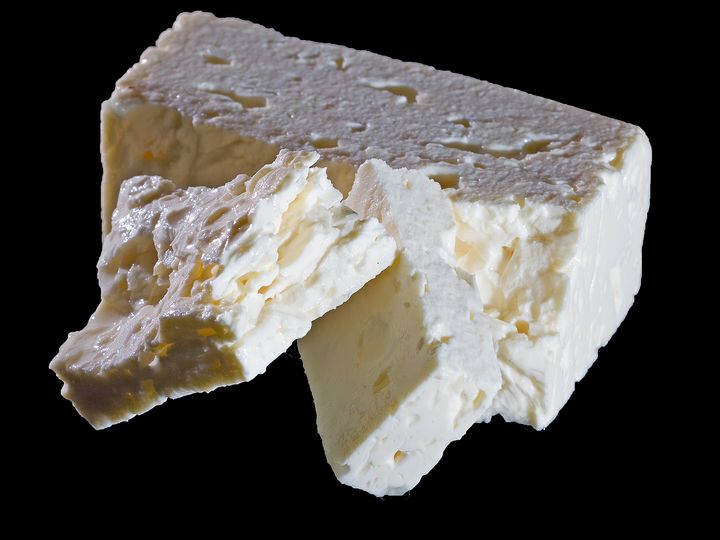
| Category | Cheese |
|---|---|
| Maker / Origin | Greece |
| Storage | Keep it submerged in its brine in a sealed container in the fridge; replace with plain salted water if the brine is gone. |
| Shelf life | About 2 to 3 weeks in brine once opened; it dries and sours quickly left out of liquid. |
| Best uses | Greek salad, spanakopita, grain bowls, watermelon salad, and baked dishes. |
| Substitutes | Cotija, queso fresco, or a mild goat cheese. |
| Pairings | Tomatoes, cucumbers, olives, watermelon, honey, and crisp white wines. |
| Last checked | October 18, 2026 |
About it
Feta is protected in the European Union: true Feta comes from Greece, from sheep's milk with some goat's milk allowed. It is sliced, salted, and matured in brine, which gives it its firm crumble and clean, briny tang.
Storing it
Never store feta dry; without brine it turns rubbery and harsh. If it smells strongly sour or develops slimy patches, discard it. Feta does not freeze well; the crumbly texture turns mealy.
Using it
Feta softens and turns creamy in heat but holds its shape instead of melting, so it bakes beautifully: whipped, roasted into pasta sauces, or folded into pies. Crumble it raw over salads and grains for a salty finish.
Swaps & pairings
Cotija gives the same salty crumble in Mexican dishes. Queso fresco is milder and softer, and fresh goat cheese brings a similar tang with a smoother texture. Rinse any swap briefly if a dish is already well salted.
More from this maker: Greece